EXPERIMENTAL FLUTTER ANALYSIS WITH BENDING-TORSION COUPLING
Keywords:
flutter, aeroelasticity, bending-torsion coupling, composite wing, fiber orientationAbstract
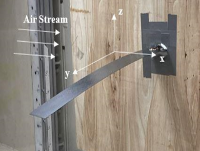
In short, bending-torsion coupling is a phenomenon that occurs when bending and torsional deformations of a structure are coupled. This can happen due to the geometry of the structure or due to the aerodynamic forces acting on the structure. Bending-torsion coupling can have significant impact on the flutter onset conditions of a structure. This study aims to presents the results of an experimental analysis of flutter for composite wing with bending-torsion coupling. The experiment is conducted in the low-speed wind tunnel (UTM-LST), where the carbon fiber composite wing with fiber orientation of [30°]4 and [45°]4 are placed on the test rig to mimic real flight condition. An accelerometer sensor is used in the experiment to measure the wing model’s structure vibration in x-, y- and z-axis. The results of the experiment have shown that the composite wing with fiber orientation of [30°]4 has higher flutter speed, which can be contributed to the existence of bending-torsion coupling due to its fiber laminate orientation.
Downloads
Downloads
Published
How to Cite
Issue
Section
License
Copyright (c) 2024 Journal of Aerospace Society Malaysia

This work is licensed under a Creative Commons Attribution-NonCommercial 4.0 International License.

